You mow the same yard every weekend and you know what it looks like. So when a patch stays spongy for three days after the rain stops, or there’s a smell near the back corner that wasn’t there last month, you notice. Those are the moments worth paying attention to, because drain field problems rarely announce themselves all at once. They build.
We’ve been handling septic work in Sanford and Seminole County since 1989, the same crew on every visit, and the calls we dread most are the ones that could have been caught six months earlier. A little context on what’s actually happening underground can save a homeowner a lot of money and a very unpleasant day.
How a Drain Field Works & Why Sanford’s Soil Pushes It Harder
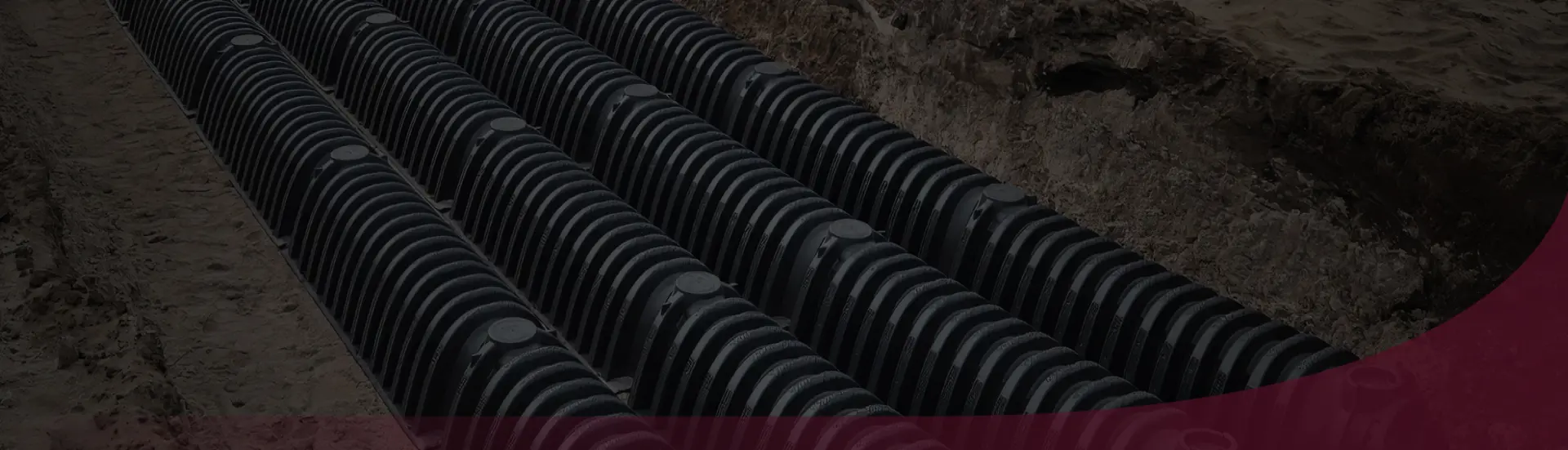
Your septic tank handles the first stage of treatment, separating solids from liquid waste. The liquid that exits the tank, called effluent, flows out to the drain field, also called a leach field, where it disperses through a network of perforated pipes into the surrounding soil. That soil does the final filtration work, stripping out pathogens and nutrients before the water reaches the groundwater table below.
Central Florida throws two complications at that process that homeowners in drier states don’t deal with. First, the sandy soils common in the Sanford area have relatively low capacity to absorb and filter effluent compared to denser soils further north. Second, the seasonal high water table shrinks the amount of unsaturated soil available to accept wastewater. When the water table rises, the effective treatment depth between the drain field pipes and the saturated ground below gets thinner. That issue gets serious during Florida’s rainy season, which runs roughly June through September. According to the Southwest Florida Water Management District, about 60 percent of Central Florida’s annual rainfall falls in those four months. A system that functions without complaint in January can start showing stress in August. Not because anything broke, but because the ground around it is already full.
Warning Signs Inside the House
Indoor symptoms are often the first thing homeowners notice, and they’re easy to misread. One slow drain is almost always a clog in that branch line, nothing to do with the drain field. The sign worth taking seriously is multiple fixtures slowing at the same time: toilets, sinks, and showers all responding sluggishly tells you the problem is downstream of those individual fixtures, somewhere in the main line or the drain field itself.
Gurgling sounds when you flush or run the washing machine happen because air gets forced backward through the pipes when wastewater can’t move through the system freely. It’s the plumbing equivalent of trying to pour from a bottle that’s already full.
Pay attention to the pattern, not just the symptom. If things slow down after heavy rain or a day of high water use, then ease off a day or two later, that’s a system running right at the edge of its capacity. It’s not a one-time clog. It’s the drain field struggling to keep up when conditions aren’t in its favor, and those marginal systems tend to tip over into full failure without much additional warning.
Warning Signs Outside in the Yard
Outdoor signs tend to be more definitive than indoor ones because they tell you the effluent has already stopped going where it’s supposed to go.
These are the three yard-side symptoms that call for immediate attention:
- Standing water or consistently soggy ground over the drain field. When this happens during dry weather, the soil has reached the point where it can no longer accept wastewater. The effluent is pooling rather than percolating downward.
- An unusually green, lush strip of grass over the drain field. Grass grows fastest where it gets the most nutrients. A strip that’s noticeably greener than the surrounding lawn is signaling that nutrient-rich effluent is surfacing into the root zone rather than dispersing deep into the soil.
- A persistent sewage odor near the drain field. Healthy drain fields don’t smell. If there’s an odor and it doesn’t clear after a day or two, wastewater is reaching the surface.
A note on biomat buildup: over time, a layer of biological material can form along the soil walls surrounding the drain field pipes, gradually reducing the soil’s ability to accept effluent. This is a leading cause of the gradual decline that produces the yard symptoms above, and one of the failure modes that sometimes responds to treatment rather than requiring full replacement.
When It Becomes an Emergency & What Happens Next
If sewage is backing up into toilets, tubs, or floor drains, stop running water and flushing. The system has reached capacity, and adding more wastewater will make the situation worse and potentially create a health hazard. That’s the point to call us immediately rather than waiting to see if it resolves.
Short of that, one of the most important things we can tell a homeowner is that not every drain field problem requires full replacement. The right fix depends entirely on what’s actually wrong:
Biomat Clogging
When the failure is caused by biomat buildup and the pipes themselves are intact, drain field treatment products or hydrojetting may restore enough absorption capacity to extend the system’s life significantly.
Isolated Pipe Damage
A single broken or collapsed section of pipe can cause symptoms that look like total system failure. A spot repair on that section may be all that’s needed.
Full Hydraulic Overload
When the soil is permanently saturated or the drain field is simply too small for the household’s water use, repair options are limited. This is the situation that typically requires replacement or the installation of an aerobic treatment unit, which processes effluent more thoroughly before it reaches the soil, making it viable for sites where a conventional drain field can’t perform.
A dye test or camera inspection is the only way to know which situation you’re actually dealing with. Both are non-invasive diagnostic tools, and they’re far cheaper than guessing wrong about what to fix.
Getting a Straight Answer in Seminole County
Onsite sewage treatment and disposal systems in Seminole County are permitted and inspected through the Florida Department of Health in Seminole County, with an office located right here in Sanford. If you’re in an older neighborhood and you’re not sure exactly where your drain field sits, that office keeps the original septic permit records for properties in the county. The permit drawing will show the field layout, which saves a lot of guesswork before anyone starts digging.
It’s also worth knowing that Florida’s septic construction standards, which used to be cited under Chapter 64E-6, F.A.C., have been renumbered to Chapter 62-6, F.A.C. Enforcement has been transitioning from the Florida Department of Health to the Florida Department of Environmental Protection since July 1, 2021. If you’re looking at older repair permits or estimates that reference 64E-6, they’re citing the outdated chapter number.
Most drain field problems give homeowners plenty of warning before they turn into emergencies, and the earlier you address them, the more options you have. Waiting until there’s sewage in the yard or backing up through the floor typically means a more involved fix and a harder conversation about cost. Acme Environmental has been doing this work in Sanford since 1989, and we’re always glad to take an honest look at what’s going on before recommending anything. Give us a call at (321) 468-9769.